We Offer Revolution Of Industrial Engineering


Best Pressure Gauge Suppliers in Dubai
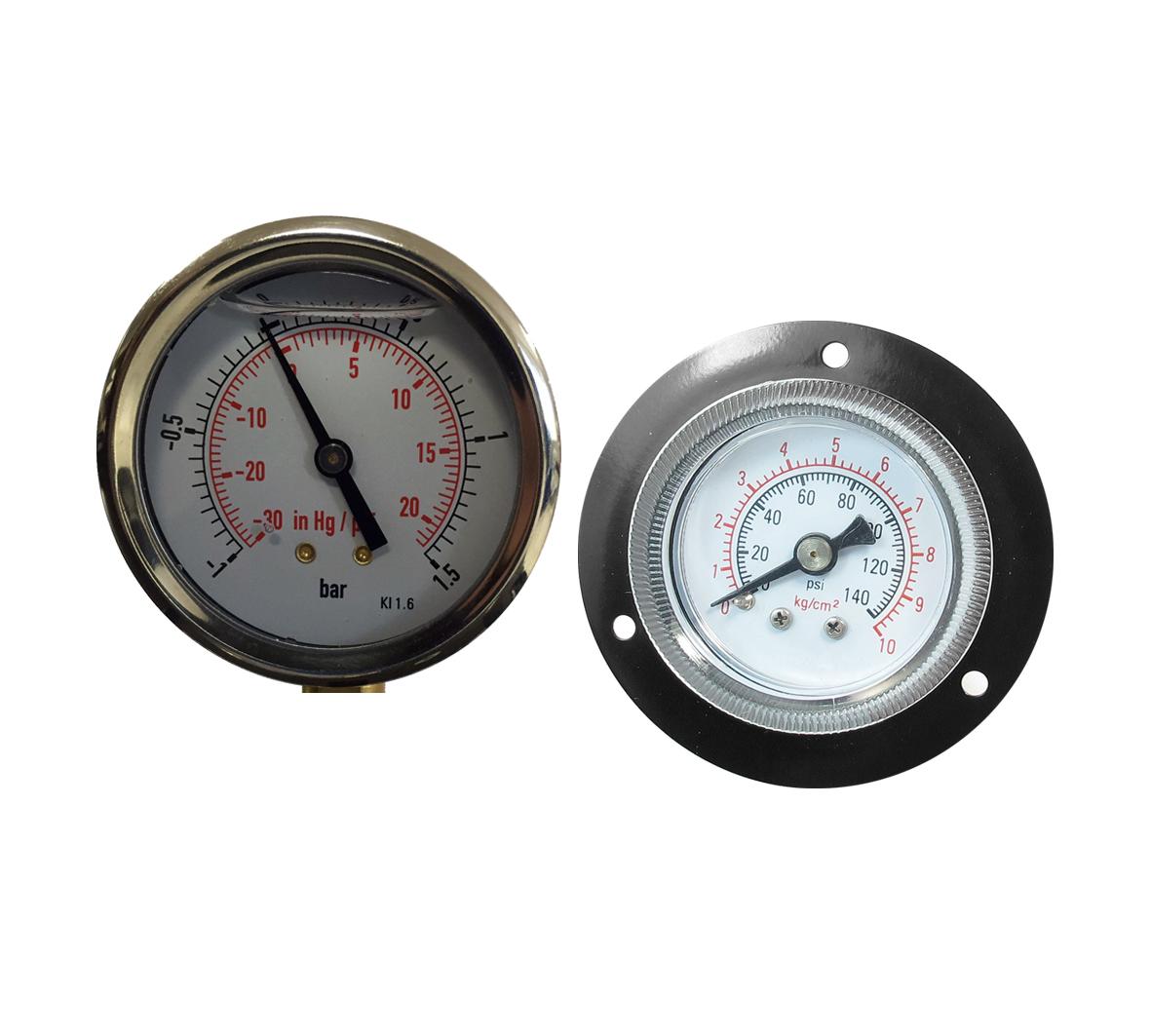
When it comes to choosing a reliable pressure gauge, the decision might seem simple: liquid-filled or dry. But before making any decision, there are some factors you need to consider to determine which gauge is the right fit for you and your situation. Gaining a clear understanding of these assets and its major disadvantage of liquid and dry gauges could save you time and money. Find here a complete guide on when and why you should choose a liquid-filled gauge or a dry gauge, and this will help you make the right choice the next time you acquire a pressure gauge.
About KEVIT Industrial Technologies:
KEVIT Industrial Technologies is a leading Thermocouple Manufacturer in Dubai, offering high-quality heating and plumbing solutions for real-life professionals, homeowners, and DIYers. Our main mission is to equip and empower consumers by providing the best products for heating and plumbing, delivering the most authentic customer service, and offering the most competitive prices available.
Dry Gauges vs. Wet Gauges—which is the best option for you?
Do you know what the differences are between wet and dry pressure gauges? Here's one of the biggest differences:
Environment
The biggest difference between the two comes with the environment. If you need a gauge to be used where it isn't exposed to a lot of vibration, then you can use a dry gauge as soon as there's the needle making it hard to tell where the readings are at. That's when a wet gauge comes into play; the liquid absorbs the shaking and pulsations, allowing you to read exactly what it is telling you. They use glycerin as the filling. You might notice that there is a bubble at the top if you ask why it's not filled all the way; that is because when the liquid starts to heat up, it will expand. Without the bubble, the gauge will start leaking.
Cold Weather Fill
Glycerin is the standard fill, which is fine for warmer temperatures, but if you're getting this gauge to be used up north or in colder climates, then you'd want the cold weather fill. This is a mixture of propylene glycol and water; this allows us to go down to negative 45 degrees while having a high-end temperature of 350 degrees Fahrenheit.
PFQ
When you get a PFQ, they come with brass internals, but they do have an option for stainless steel internals as well. If you look closely, you'll notice that it's a crimped encasing; because of this, it's considered a throwaway cage if it stops working or breaks for any reason. It's built to be replaced with a new one, unlike some of our other gauges that have an accessible body allowing for repairs. It does come with a vent above the filled plug. The reason you vent it is to allow pressure to escape on lower psi readings like 10 to 60 PSI. You might see an inaccurate gauge or the pointer floating above zero if there is pressure built up from rising temperatures or change in climate that hasn't been released, you know, maybe when it was shipping. Then you can see inaccurate readings. We release the pressure; it's very simple, but be careful not to push the rubber top all the way through, or you might need to buy another gauge. Liquid-filled gauges would especially be used by your liquid-powered lines or anywhere there's a lot of pulsation and vibration going on. The liquid fill dampens the pointer out so it can be read easily as well as lubricates and protects against corrosion for the pointer. These gauges are PSI only.
Full Varieties
At Kevitits, our Temperature gauge suppliers in Dubai do offer a full variety of temperature gauges. You can have one with a back connection, or you can clamp it to allow you to put it into a panel or on the surface of one. The ranges go from full vacuum up to 15,000 PSI.
Ranges
The PFQ gauges come in an inch and a half; two gauges come in an inch and a half, two and a half, or four-inch dial sizes. They also come with either a back or a bottom.
Connections
For connection sizes of an inch and a half or an eighth inch, two and a half would be a quarter inch, and four inches can either be a quarter or half inch connection. These connections come with a threaded orifice; the reason is that that's being used on a clean hydraulic system.
Restrictions
They may want a restrictor on it; if you open up a ball valve with a hundred psi, it will hit a smaller entrance, allowing the blow to be absorbed without damaging the gauge, whereas if you didn't, all the pressure could hit at once, potentially harming it. The gauge and also creating a hammer affect the standard PFQ that comes with leaded breasts; however, if you have an application that has potable water. They're going to need a gauge that has lead-free brass to meet the clean water drinking act when it has a "Pb" at the end of the part number. This stands for lead-free, not liquid-filled. So the benefits and the disadvantages of each gauge operation are different and can require particular gauges. If you're interested in looking at either of these gauges or if you're hoping to learn more from our thermo well suppliers in Dubai, please visit us at https://www.kevitits.com/. Our Pressure Gauge Suppliers in Dubai will be happy to get back to you with requests.